Doom: The Dark Ages – Revelations Is a Metroidvania, and Nobody Said So
The marketing promised more demons and more firepower. id Software shipped six levels built around a hub you backtrack through, gated progression, and a new weapon whose real contribution is letting you go upwards. For a series about never stopping, that's close to heresy.
By Shujaat Ahmed · · · 6 min read
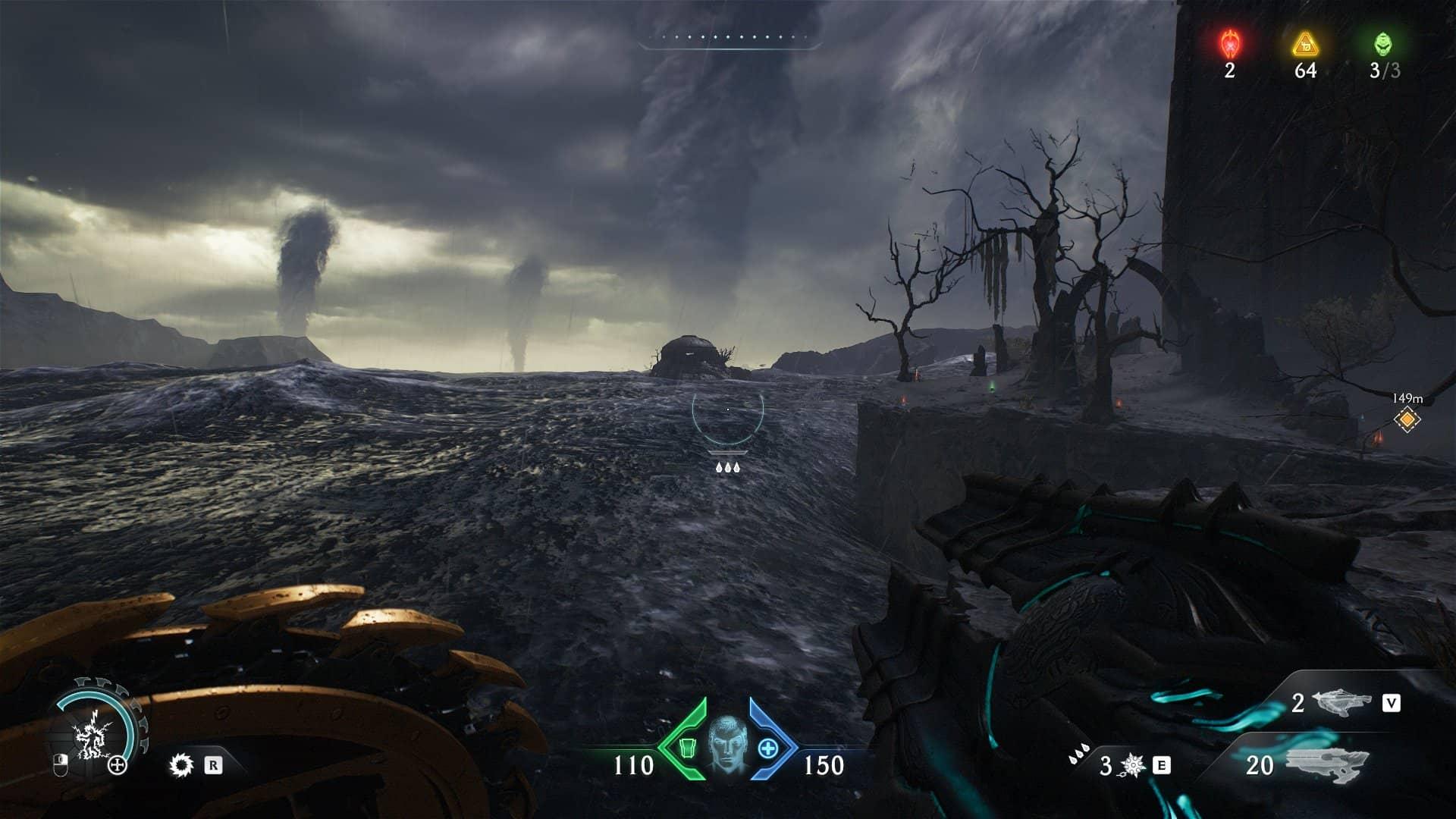
DOOM: The Dark Ages – Revelations arrived on July 7, 2026, on PC, PS5 and Xbox Series, and the marketing sold it the way Doom expansions are always sold: more demons, more firepower, more carnage.
What id Software actually shipped is stranger than that, and considerably more interesting. Revelations is built around a hub world you backtrack through, with Metroidvania-style progression gating. For a series whose entire identity is forward momentum, that is close to heresy.
Six levels, one hub, and a map you re-read
The expansion's six levels are structured around an interconnected hub environment called Purgatory. Rather than a linear chain of arenas, the layout asks you to return through zones you have already cleared — solving puzzles, uncovering secrets and opening pathways that were closed to you until you acquired the ability to pass them.
Stop and consider how against type that is.
Doom's design philosophy, from 1993 through Eternal, is about never stopping. The push-forward combat loop — health from glory kills, ammo from the chainsaw, armour from the flamethrower — exists specifically to punish retreat and reward aggression. The levels are corridors and arenas because the game does not want you thinking about geography. It wants you thinking about the next three seconds.
A hub with locked doors and deliberate backtracking inverts that. It asks you to hold a mental map, plan a route, and return somewhere you have already been. Those are the cognitive habits of a completely different genre.
The Spear, and why verticality is the real change
The new weapon is the Spear, a left-handed armament used alongside the Shield — and its significance is not damage output. It grants vertical mobility.
Doom combat has always been fundamentally horizontal. You circle-strafe, you cut angles across an arena floor, you use elevation when a level offers it but you rarely create it. Eternal pushed hardest against this with the meathook and dash, and even there verticality was episodic rather than continuous.
Give the player a reliable way to go up, and every arena in the game has to be reconsidered. Sightlines change. Demon placement that worked as a ground-level pincer becomes an invitation to leave. The whole encounter grammar shifts.
That is why the Spear and the Metroidvania structure are the same design decision rather than two separate features. Vertical mobility is what makes a backtracking hub legible in a first-person shooter — you need to be able to reach the ledge you saw on the way in. The traversal tool and the level architecture were built for each other.
What you get for the money
The concrete contents, per Bethesda's own breakdown:
- A new single-player campaign, estimated at 10 to 12 hours
- The Spear, the new left-handed weapon paired with the Shield
- New enemy types
- Substantial endgame content
- A free update to Morgue mode for all owners of the base game
The pacing split is the number worth noting: roughly 60% core story progression and 40% endgame material. That is an unusually endgame-heavy ratio for a Doom campaign, and it aligns with the structural choice — a hub you keep returning to only pays off if there is a reason to keep returning after the story ends.
Ten to twelve hours for an expansion campaign is substantial. For comparison, that is comfortably within range of what several full-price releases shipped this year.
Does the experiment work?
The honest answer is that it depends entirely on what you want Doom to be, and reasonable people land in different places.
The case for: Doom Eternal already pushed the series toward puzzle-like combat, where each encounter is a resource-management problem solved at speed. Extending that from the encounter to the level is a logical next step, and it gives the expansion a reason to exist beyond "more of the campaign you already finished." Backtracking through an environment you have mastered, now able to reach places you previously could not, is a genuinely satisfying loop — it is why Metroidvanias work.
The case against: friction is the enemy of flow, and Doom's combat is flow. Every minute spent consulting a map or retracing a corridor is a minute not spent in the loop the series exists to deliver. There is a real risk that the structure dilutes precisely what people came for.
What is not in doubt is that id took a swing. A studio with this franchise's commercial security could have shipped six linear levels and a new gun, and nobody would have complained. Choosing instead to restructure how a Doom campaign is navigated is the sort of decision that either ages very well or becomes a footnote.
Where it sits in the year
Revelations landed in early July — comfortably clear of the autumn crush, and well before the stretch of calendar that publishers have abandoned around November's blockbuster.
That timing is sensible for an expansion. DLC lives or dies on reaching the people who already own the base game, and it does not need a clear window the way a new release does. July gave it room to be the thing people were playing for a few weeks, which is the whole job.
Worth playing?
If you finished The Dark Ages and wanted more, yes — ten to twelve hours of new campaign with a genuinely new traversal tool is a real expansion rather than a level pack.
If you bounced off The Dark Ages because its combat felt slower and more deliberate than Eternal's, Revelations will not change your mind. The hub structure adds more deliberation, not less.
And if you own the base game but skipped the DLC, the free Morgue mode update arrives regardless, which is a decent gesture.
The takeaway
The marketing said more demons and more firepower. What id actually shipped was a structural experiment: a Doom campaign built around a hub, gated progression and a weapon whose main contribution is letting you go upwards.
Whether that is the future of the series or a one-off detour, it is the most design-forward thing to come out of this franchise in years — and considerably more notable than "the Slayer returns" suggested.
Tags: gaming news PC Gaming Action Games doom the dark ages revelations expansion doom expansion news id software xbox series x doom lore sci fi shooter
Written by Shujaat Ahmed
Shujaat Ahmed is the founder and editor of Door To Gaming. A lifelong gamer, he writes about the games, hardware, and industry news he cannot stop thinking about.