Subnautica 2's Release Date Was Decided by a Court, Not a Studio
A Delaware judge found that Krafton schemed to delay Subnautica 2's early access launch to avoid a $250 million payout — and ordered control of the release date handed back to the studio. Two months later it shipped, and sold four million copies.
By Shujaat Ahmed · · · 6 min read
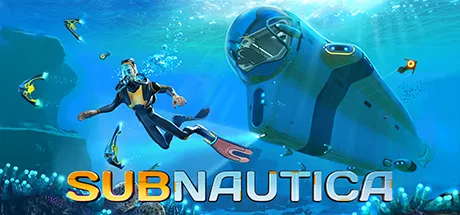
Subnautica 2 entered early access on May 14, 2026, on Steam, the Epic Games Store and Xbox Series X|S, day one on Game Pass, with one to four player co-op built in from the start rather than bolted on.
The interesting question is not whether co-op ruins the loneliness. It is why the game came out when it did — because that date was not, in any ordinary sense, a development decision. It was the outcome of a Delaware court order in a dispute over $250 million.
The lawsuit that set the release date
In July 2025, Unknown Worlds' three founders — Charlie Cleveland, Max McGuire and Ted Gill — sued their publisher, Krafton.
Their claim: Krafton owed them an earnout worth up to $250 million, tied to revenue goals, and had deliberately moved to delay Subnautica 2's early access release so those goals could not be met in time. When they refused to go along with the delay, they were fired.
Krafton countersued, alleging the founders had abandoned development and misappropriated materials.
On March 16, 2026, Delaware Vice Chancellor Lori Will ruled, and the findings were not ambiguous. She concluded that Krafton had schemed to remove the executives in order to avoid triggering the payout, and wrote that "Krafton's newly-manufactured justifications for the terminations are pretextual."
The court also found that Krafton CEO Changhan Kim believed the company had overpaid for the studio — and that he consulted ChatGPT to help devise a takeover strategy, one component of which was delaying Subnautica 2's early access release.
That is not an allegation from a press release. It is a finding of fact from the Delaware Court of Chancery.
What the court actually did about it
The remedy was unusually direct. Vice Chancellor Will ordered Krafton to reinstate Ted Gill as CEO with "full operational authority" — which, explicitly, meant final say over Subnautica 2's release date.
Control of the schedule was taken from the publisher and handed back to the studio by judicial order. The earnout period was extended by the length of Gill's absence, so the time he had been locked out did not count against the clock.
The court declined to reinstate Cleveland and McGuire, and deferred the question of damages to a second phase.
Two months later, Subnautica 2 shipped.
When people say a publisher delayed a game, they usually mean a scheduling argument. Here a court found the delay was the strategy, and reversed it.
How it ended
The litigation did not run its course. On July 1, 2026, the two sides settled.
Krafton dismissed all pending proceedings against Unknown Worlds and the three founders. It committed to paying bonuses to the entire Subnautica 2 staff — not just the executives named in the original agreement — with Gill saying developers would receive "significantly more" than originally specified, plus further incentives as the game receives updates, paid across three annual installments.
Ted Gill then resigned, saying new leadership was the best way for the studio to move forward. Krafton and Unknown Worlds are jointly searching for an outside replacement.
By the time the settlement was announced, Subnautica 2 had sold more than four million copies.
That figure is the quiet punchline. The publisher's position, as the court described it, rested on the belief that it had overpaid for the studio. The game then sold four million copies in early access.
Now, the actual game
None of that would matter if the game were bad. It isn't.
Early impressions have been strong, and the improvement people keep returning to is base building — smoother, more legible construction tools that remove much of the fiddliness the first game asked you to tolerate. Sprinting is in. The underlying survival systems have been reworked rather than reused.
But co-op is the change that reshapes the experience, and it deserves a more honest treatment than "it ruins the horror."
What co-op does and doesn't take away
The objection is real and worth stating properly. Subnautica's horror was never about monsters. It was about isolation — being four hundred metres down in a lightless trench, hearing something enormous that you cannot see, with nobody to tell. Add a friend on voice chat and that specific feeling is gone. Not diminished; gone.
That is a genuine loss, and players who loved the original for exactly that reason are not wrong to be wary.
What replaces it is different rather than lesser. Four-player co-op turns the deep ocean into a logistics problem: who takes the Seamoth, who holds the base, what happens when someone's oxygen runs low two hundred metres from the nearest pocket. Fear becomes responsibility for someone else, which is a real emotion, just not the one the first game traded in.
The crucial design decision is that co-op is one to four players. Solo is not a degraded mode — it is the default the game is still built around. Unknown Worlds designed the multiplayer from the ground up rather than retrofitting it, which matters: retrofitted co-op is where survival games usually break, because the systems were balanced for one person's attention and one person's resources.
If you want the original experience, it is still there. If you want to bring three friends, that is a genuinely different game rather than a compromised version of the same one.
Should you play it now?
Early access is early access, and this one has a published roadmap covering further co-op improvements, additional biomes and future expansions. Things will change, saves may break, and the story is not finished.
Play now if you enjoy watching a survival game take shape, or if the co-op is what you came for — that is the part already working well and the reason four million people have bought in.
Wait if you want Subnautica's narrative to land the way the first game's did. That payoff depends on a finished arc, and this is not that yet.
The part worth remembering
Subnautica 2 is a good early access launch with a real improvement in base building and a co-op mode that changes what the series is without wrecking what it was.
But the story around it is the more instructive one. A publisher was found by a court to have plotted — with help from a chatbot — to delay a game in order to avoid paying the people who made it. The remedy was to hand the release date back to the studio. The game then shipped, sold four million copies, and the publisher ended up paying bonuses to the whole team anyway.
Not every studio in that position has a $250 million earnout and the means to litigate in Delaware. Most do not. That this one did is the only reason any of it is a matter of public record.
Tags: Xbox Game Pass Subnautica 2 Subnautica 2 Early Access Subnautica 2 co-op Subnautica 2 multiplayer survival horror games underwater survival games Unknown Worlds Entertainment Subnautica sequel Planet 4546B Subnautica 2 review Subnautica 2 gameplay PC gaming 2026 Xbox Series X games co-op survival games
Written by Shujaat Ahmed
Shujaat Ahmed is the founder and editor of Door To Gaming. A lifelong gamer, he writes about the games, hardware, and industry news he cannot stop thinking about.