Marvel's Wolverine Review Scores Explained: A 78 Built From 5s and 10s
Giant Bomb gave it a 5. Several outlets gave it a 10. A fifty-point spread isn't what a mediocre game looks like — it's what a divisive one looks like. And after launch, players split exactly the same way.
By Shujaat Ahmed · · 11 min read
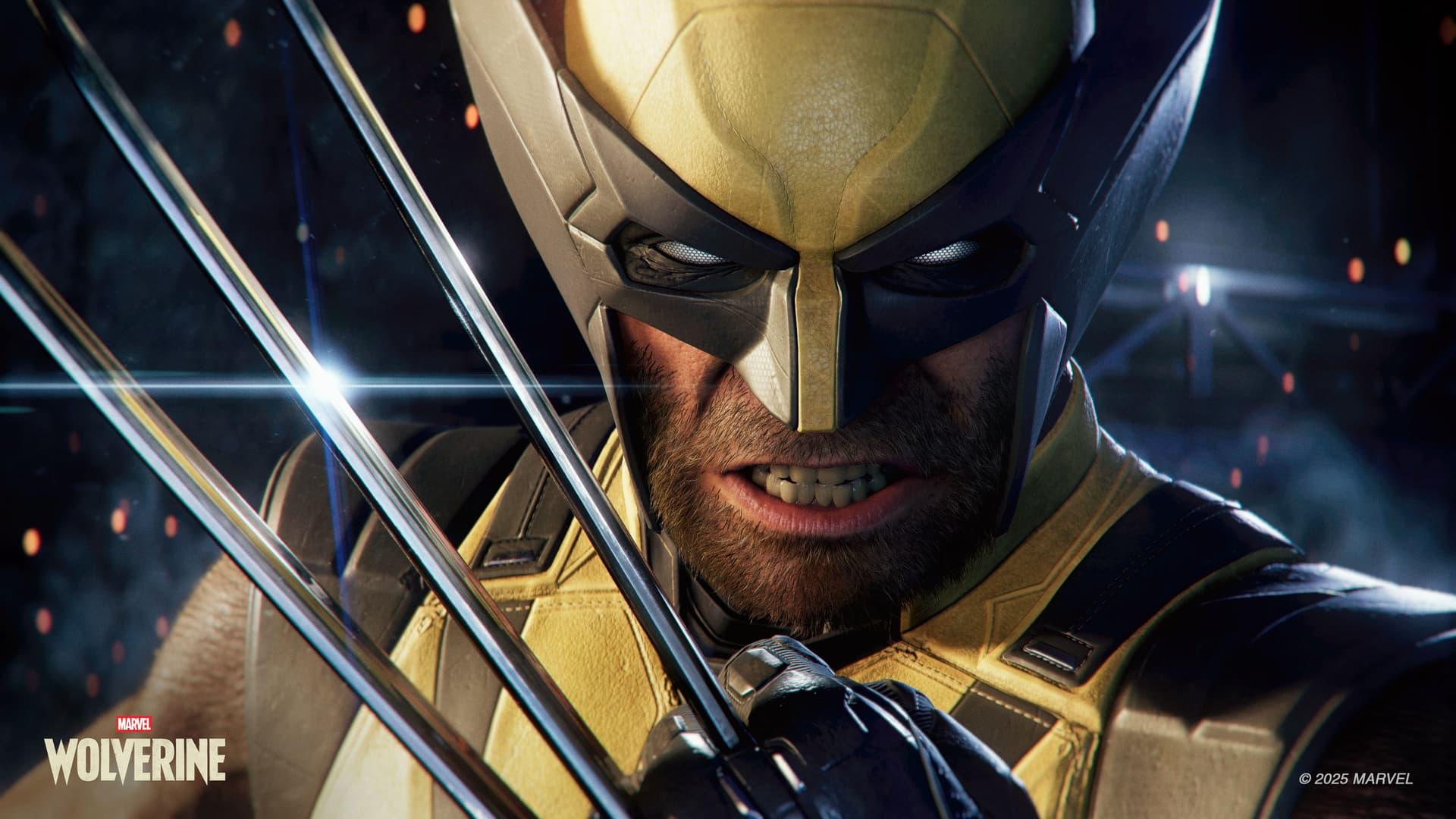
The review embargo on Marvel's Wolverine lifted on September 10, five days ahead of its PS5 launch, and the internet needed about an hour to settle on a headline. Seventy-seven on Metacritic. Insomniac's worst-reviewed original game in a decade. By the following morning, with more critics counted, it had nudged up to 78 across 111 reviews.
That number is being passed around as a verdict. It isn't one. An average only tells you something useful when the scores it is built from cluster around a middle, and these don't. Giant Bomb gave it a 5. A handful of outlets gave it a 10. The gap between the harshest and the most generous review of Marvel's Wolverine is fifty points, which is not what a mediocre game looks like. It is what a divisive game looks like, and the distinction matters a great deal if you are deciding whether to spend $69.99 on it.
The scores, and what the shape of them tells you
Sort the reviews and the middle of the distribution is oddly empty.
At the bottom sits Giant Bomb at 5/10, followed by a tight block of 6s from IGN, GameSpot, GamesRadar+, Eurogamer, VGC and ComicBook. At the top, Digital Chumps landed on 91, with PlayStation Universe, GameSpew and GamingTrend at 90, and COGconnected, Hardcore Gamer and GamingBolt going all the way to perfect. Game Informer, Wccftech, DualShockers and Gaming Nexus settled at 85. Push Square, Destructoid, TechRadar Gaming and Game Rant clustered at 80. OpenCritic currently has roughly four out of five critics recommending it.
Two camps, both large, both confident, and very few people in the middle hedging. When a distribution looks like that, it usually means the critics agree on what the game is and disagree about whether that is a good thing.
Read enough of these reviews and that turns out to be exactly what happened.
Everyone agrees about Logan
Here is what gets lost the moment a score becomes the story: there is a genuine consensus buried in these reviews, and it is unusually warm.
Liam McIntyre's Logan is praised in nearly every review across the entire fifty-point range. IGN's 6/10 goes out of its way to say the game gives his performance real depth. The 9s and 10s build their whole case around him. Both ends are describing the same performance and neither has a bad word for it. The same goes for the presentation: the snowbound Canadian wilderness, the neon of Tokyo, the grime of Madripoor, and a set of finishers that are unapologetically brutal in a way no licensed Marvel game has previously been allowed to be.
There is also one criticism that survives the divide, which makes it the most credible complaint on the board. Even the positive reviews say the combat runs out of ideas. Destructoid scored it an 8 and still described the moveset as leaning hard on mashing square and triangle. Sirus Gaming gave it a 9 and still singled out a badly designed Sentinel encounter. IGN's line, that the combat "wears thin well before its conclusion," is a sharper version of something the game's defenders quietly concede too.
So the honest summary of 111 reviews isn't "mediocre." It is closer to this: a superb Wolverine wrapped around a fight system with less depth than its budget implies. Where a critic landed on the scale mostly comes down to which half of that sentence they weighted.
Insomniac made an anti-blockbuster, and that is the real argument
The second fault line is structural, and it is the more interesting one.
Marvel's Wolverine is not an open-world game. It is linear and chapter-based, it runs 15 to 17 hours for most reviewers, and it has no map full of icons, no crafting economy and no side-quest board. You move through authored locations — Team X's headquarters, a cabin in the Canadian mountains, Tokyo, Madripoor — and the game ends when the story does.
For roughly fifteen years, Sony's first-party identity has been the opposite of that. The forty-hour prestige open-worlder is the house style, and it is what a $70 PlayStation exclusive has trained everyone to expect. So when the critical reviews call Wolverine "dated," or a relic of the early 2000s, or say it lacks ambition, a lot of what they are objecting to is scope. It is a smaller game than the box implies.
And when the positive reviews call it a breath of fresh air after the run of open-world games Sony has shipped, they are reacting to the exact same quality — approvingly.
That is not critics being unreliable. It is a real disagreement about what a full-price first-party release is supposed to be in 2026, and it has landed on a game that made a deliberate bet on the unfashionable answer. Insomniac built 15 tight hours instead of 40 loose ones. Some reviewers read that as discipline. Others read it as a $70 game that ends too soon.
The systems, and why they read two ways
Look at what is actually under the hood and you can see how both readings stay available.
Combat is built around a Rage meter that fills as you kill, feeding damage and critical bonuses. On top of that sit Techniques — unlockable moves with names like Healing Strike, Sprinting Block and Tornado Spin — and Adaptations, loadout modifiers you slot within a limited budget. Exploration is light but not absent: bottles of whiskey scattered through the levels convert into ability points, alongside costume materials and lore pickups. There are optional Nightmare Door challenge rooms and a New Game+ for a second run.
That is a coherent, legible action game. It is also, by 2026 standards, a modest one. Set it beside what a dedicated character-action studio ships — the layered cancels, the weapon swapping, the twenty-hour skill ceiling — and it is clear Insomniac aimed at accessibility and spectacle rather than mastery. If the Wolverine power fantasy is what you came for, these systems deliver it inside five minutes and never stop delivering it. If you wanted a combat engine that keeps opening up across fifteen hours, it closes early.
Neither camp is describing the game inaccurately. They wanted different things from it.
A rough road to launch
Some context belongs on the table, with a caveat attached to it.
Wolverine had a genuinely difficult development. In December 2023, the Rhysida ransomware group breached Insomniac and — after a $2 million ransom demand went unpaid — dumped roughly 1.67 terabytes across more than 1.3 million files, including early gameplay slices, level design material and the studio's forward roadmap. The dump even contained a signed Sony–Marvel publishing agreement covering three X-Men games with a minimum spend of $120 million each. A humiliating leak for a team in the middle of a project.
Then, by October 2024, the game changed hands creatively: original creative director Brian Horton left for The Initiative to lead Perfect Dark, with Marcus Smith taking over as creative director and Mike Daly as game director. Sources told Game File the move came down to creative differences.
The caveat matters. Insomniac has never linked either event to the finished game's quality, and nobody outside the studio should claim otherwise with confidence. Plenty of troubled productions ship beautifully and plenty of smooth ones ship badly. But a creative leadership change that late is usually a sign something needed resolving, and "focused but conservative" is a very recognisable shape for a game that got re-pointed in its final stretch.
What a 78 actually costs Sony
Perspective helps here. A 78 is Sony's lowest-scoring in-house PS5 production since 2020. It is also a score most publishers on earth would take without blinking. God of War Ragnarök sits at 94 and Marvel's Spider-Man 2 at 90; when those are the reference points, a 78 reads as a stumble rather than a catastrophe. If this is the floor of Sony's first-party output, the floor is high.
The sting is comparative, and it is mostly about Insomniac specifically. Marvel's Spider-Man hit 87, Miles Morales 85, Spider-Man 2 90, Ratchet & Clank: Rift Apart 88. The studio's reputation was built on never missing. That is the streak that ended this week — it is Insomniac's lowest score for an original game since Song of the Deep back in 2016.
The timing does not help either. Sony's 2026 exclusive slate has been thin, which is precisely why June's State of Play landed so hard — Wolverine and God of War: Laufey were supposed to carry the year between them. And there is a clock running: GTA 6 arrives on November 19, after which every other game on the calendar spends a month being ignored. Wolverine is Sony's last unobstructed swing of 2026.
None of this will show up in the sales figures. Marvel character games sell on the character, review scores are a rounding error next to a Wolverine logo on a box, and Sony has already built a limited-edition PS5 bundle around it. This was never going to flop. It simply was not the unambiguous win Sony's autumn had been scripted around.
So should you buy it?
Concrete advice, since that is the only thing the score was ever a proxy for.
Buy it if you want a Wolverine game more than you want a long game. If the appeal is Logan himself — the performance, the violence, the healing factor as an actual mechanic, a story that finally commits to being properly R-rated — this is the best version of that anyone has made, and the critics who handed out 9s and 10s are not wrong on their own terms. Fifteen confident hours beat forty hours of filler.
Wait for a discount if your buying decision runs on hours per dollar, or if what you love about Insomniac is the traversal and the sandbox. This game has neither. At $69.99 standard and $79.99 for the Digital Deluxe — five extra suits, five claw sets and four Technique Points — it is priced like a tentpole and sized like a tight, expensive film. That is a fair trade for some people and a poor one for others, and there is no shame in being in the second group.
One practical note: if you are on a PS5 Pro, reviewers consistently reported clean performance with 120Hz support, VRR and ray tracing, with only scattered minor bugs — the technical side is not a reason to hold off.
Update after launch: the players split the same way
The game released on September 15, and the user reaction settled into the same shape as the critical one — which is the strongest evidence yet that the bimodal read was right.
Metacritic's user score landed at 6.5, built from roughly 60% positive, 32% negative and only 8% in the middle. That is not a crowd converging on "decent." It is two crowds, exactly as the critics were.
The complaints echo the professional ones almost precisely. The most-quoted 0/10 — "Why is it called a game when it plays itself?!" — is the accessibility-over-mastery objection in cruder form, alongside grumbling about hand-holding waypoints and the phrase "a $70 movie." That is the same scope-and-depth argument the 6s made.
Two caveats worth stating plainly. Some of the negative wave was a culture-war pile-on about queer characters and character designs rather than anything to do with combat systems, and some of the positive wave was explicitly retaliatory — at least one user admitted inflating an 8 to a 10 to offset the bombing. Both distort the number. The critic aggregate, at 79 with 68% recommending, remains the more trustworthy of the two.
But strip the bad-faith votes from either end and the residue still looks bimodal. This is simply a game people land hard on.
The takeaway
Marvel's Wolverine is the rare big release where the aggregate score is the least informative number attached to it. A 78 assembled out of 5s and 10s does not mean "average." It means the game is sharply defined, commits hard to a small number of things, and declines to do several things a $70 PlayStation exclusive is normally expected to do.
That makes it easy to recommend and easy to warn people away from, sometimes inside the same paragraph. What it isn't is the thing a 78 implies — safe, forgettable, middle of the road. Whatever else Insomniac got wrong here, nobody who plays it is going to shrug.
Tags: GTA 6 Marvel Wolverine Wolverine PS5 Insomniac Games PlayStation Exclusives PlayStation 5 Marvel Games Sony PlayStation Action Games PS5 Video Game Review Marvel Wolverine Review Metacritic Review Scores Liam McIntyre
Written by Shujaat Ahmed
Shujaat Ahmed is the founder and editor of Door To Gaming. A lifelong gamer, he writes about the games, hardware, and industry news he cannot stop thinking about.