Square Enix Isn't Ending Exclusivity. It's Clearing a Path to the Finale.
FF7 Rebirth arrived on Switch 2 and Xbox in June, and Revelation will be multiplatform in 2027. But the more revealing addition is Streamlined Progression — unlimited HP, MP and 9,999 damage — which quietly admits the trilogy's real barrier was never difficulty.
By Shujaat Ahmed · · · 6 min read
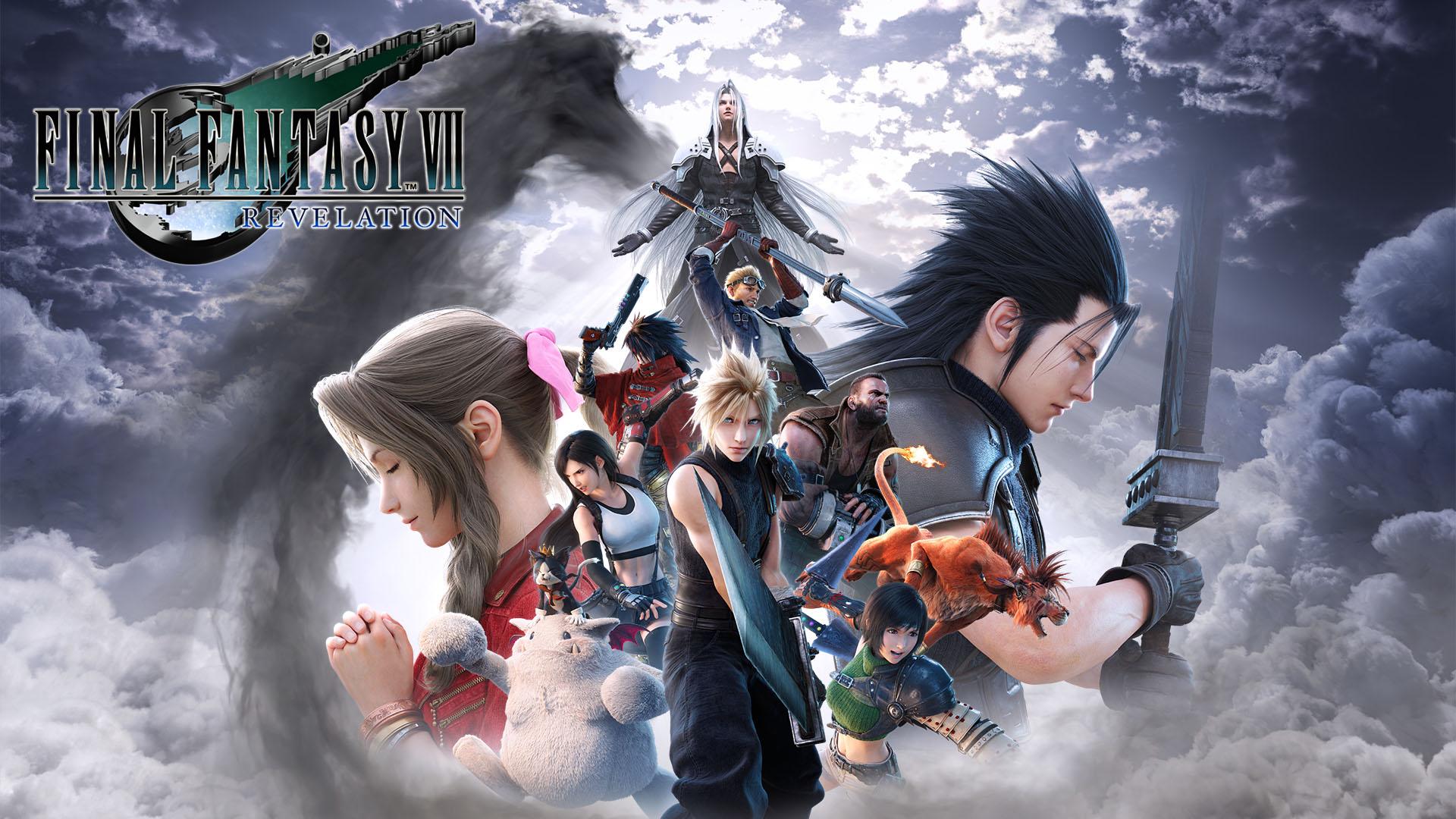
Square Enix made two announcements about Final Fantasy VII that were widely reported as one story about platform exclusivity ending. They are better understood as two solutions to the same problem, and the problem is not which console you own.
It is that the finale of this trilogy arrives in 2027, and to appreciate it you need to have finished roughly a hundred hours of the middle chapter first.
What actually shipped
At a Nintendo Direct on February 5, 2026, Square Enix confirmed that Final Fantasy VII Rebirth was coming to Nintendo Switch 2, Xbox Series X|S and Xbox on PC. It arrived on June 3, 2026, with Xbox Play Anywhere support, alongside the existing PS5 and PC versions.
The launch came with a 20% discount through June 10, and Digital Deluxe pre-orders carried the usual bundle of cosmetic and convenience items — Moogle Trio and Posh Chocobo summoning materia, two bangles, a digital artbook and a mini-soundtrack.
The second announcement was the consequential one: Final Fantasy VII Revelation, the trilogy's conclusion, will be multiplatform from day one — PS5, Switch 2, Xbox and PC. It is dated 2027, with director Naoki Hamaguchi having shown it at Gamescom.
A trilogy that began as a PlayStation showcase ends as a game on everything.
The feature nobody wrote about
Buried in the Rebirth release notes is a mode called Streamlined Progression, and it is a more radical decision than the platform news.
It gives you unlimited MP and HP, unlimited Limit and ATB gauge during battles, and 9,999 damage output.
That is not a difficulty setting. It is an option to effectively switch the combat system off.
For a series whose identity is built on battle systems — and for Rebirth specifically, which layered synergy abilities, party mechanics and materia customisation into one of the most elaborate combat designs Square Enix has shipped — offering a mode that bypasses all of it is a striking admission.
What it admits is this: the barrier to playing Rebirth is not difficulty. It is length.
The funnel problem
Work through the arithmetic facing Square Enix and the strategy becomes obvious.
Final Fantasy VII Revelation is the third part of a trilogy. Its emotional payoffs depend on Remake and Rebirth. Rebirth alone runs comfortably past a hundred hours for a completionist, and well over fifty for anyone just following the story.
So the addressable audience for the 2027 finale is not "people who like Final Fantasy." It is "people who have finished two very long games, the second of which was a PlayStation 5 exclusive."
That is a brutally narrow funnel, and every move Square Enix has made this year widens it:
- Multiplatform Rebirth removes the hardware requirement.
- Streamlined Progression removes the time and skill requirement.
- A 20% launch discount removes some of the cost requirement.
- Day-one multiplatform for Revelation ensures the finale is not gated again.
None of these is about the game currently on sale. They are all about maximising how many people are ready when the trilogy concludes.
The platform announcement was reported as Square Enix abandoning exclusivity. It is better read as Square Enix doing whatever it takes to get people to the ending.
The Switch 2 question
One thing worth flagging for anyone choosing a platform: Rebirth was built as a PS5 exclusive, and it shows in the specification. It is a large, densely populated open world with an expensive combat system running on hardware that was, at the time, the most capable console available.
Getting that onto Switch 2 is a real engineering problem, not a recompile. Expect the trade-offs that always accompany this kind of port — resolution, draw distance, foliage density, and the frame rate in the busiest combat encounters are where a handheld-class device gives ground first.
None of that makes it the wrong version to buy. Portability is a genuine advantage for a game measured in dozens of hours, and a fifty-hour story you actually finish on a handheld beats a hundred-hour one you abandon on a television. But if you own both an Xbox Series X and a Switch 2, and the visual presentation matters to you, the Xbox version is the technically stronger one. Xbox Play Anywhere also means a single purchase covers console and PC.
Why exclusivity stopped being worth it
The broader shift is real and not unique to Square Enix.
Platform exclusivity is a trade: a publisher accepts a smaller audience in exchange for a payment or strategic position from the platform holder. That trade works when development costs are modest relative to the payment, and when the platform's installed base is large enough that the sacrifice is bearable.
Neither condition holds comfortably now. Budgets have climbed steeply, and the wider industry has spent three years contracting. Meanwhile the platform holders themselves have stopped believing in it — Microsoft shipped Halo on PlayStation this year, and Forza Horizon 6 is promised to PS5.
When the companies that own the platforms are releasing their flagship franchises everywhere, a third-party publisher has very little reason to accept a smaller audience for a hundred-million-dollar production.
Should you play Rebirth now?
If you have a Switch 2 or Xbox and never had a PS5, this is the reason to care. Rebirth is an exceptional game and it was previously locked away from you. It is now not.
If you bounced off it because of the length, Streamlined Progression genuinely changes the proposition. Turning off combat friction to move through the story is a legitimate way to play a game this long, and it is there specifically for you.
If you have already played it on PS5, there is no reason to buy it again unless you want it portable on Switch 2.
If you are thinking about the 2027 finale, start now. Remake and Rebirth are a lot of game, and the runway to Revelation is shorter than it looks.
The takeaway
The headline was that Final Fantasy VII stopped being a PlayStation exclusive. The more useful observation is that Square Enix has spent 2026 systematically removing every obstacle between a potential buyer and the trilogy's conclusion — hardware, time, difficulty and price.
That is what a publisher does when it has one enormously expensive shot at an ending, and it needs as many people as possible to be standing there when it arrives.
Tags: gaming news console gaming final fantasy 7 revelation ff7 revelation release date ff7 rebirth xbox release ff7 rebirth switch 2 square enix summer game fest 2026 final fantasy vii trilogy finale ff7 revelation platforms cloud strife highwind gameplay fits system ff7 square enix multiplatform strategy
Written by Shujaat Ahmed
Shujaat Ahmed is the founder and editor of Door To Gaming. A lifelong gamer, he writes about the games, hardware, and industry news he cannot stop thinking about.