The Relic: First Guardian — Twelve People, Six Years, Eighteen Patches
A dark action RPG built on Korean mythology by a team of about a dozen, delayed for polish and then patched eighteen times after launch. That number is the real story, and judging the game by its launch build means judging the wrong game.
By Shujaat Ahmed · · 6 min read
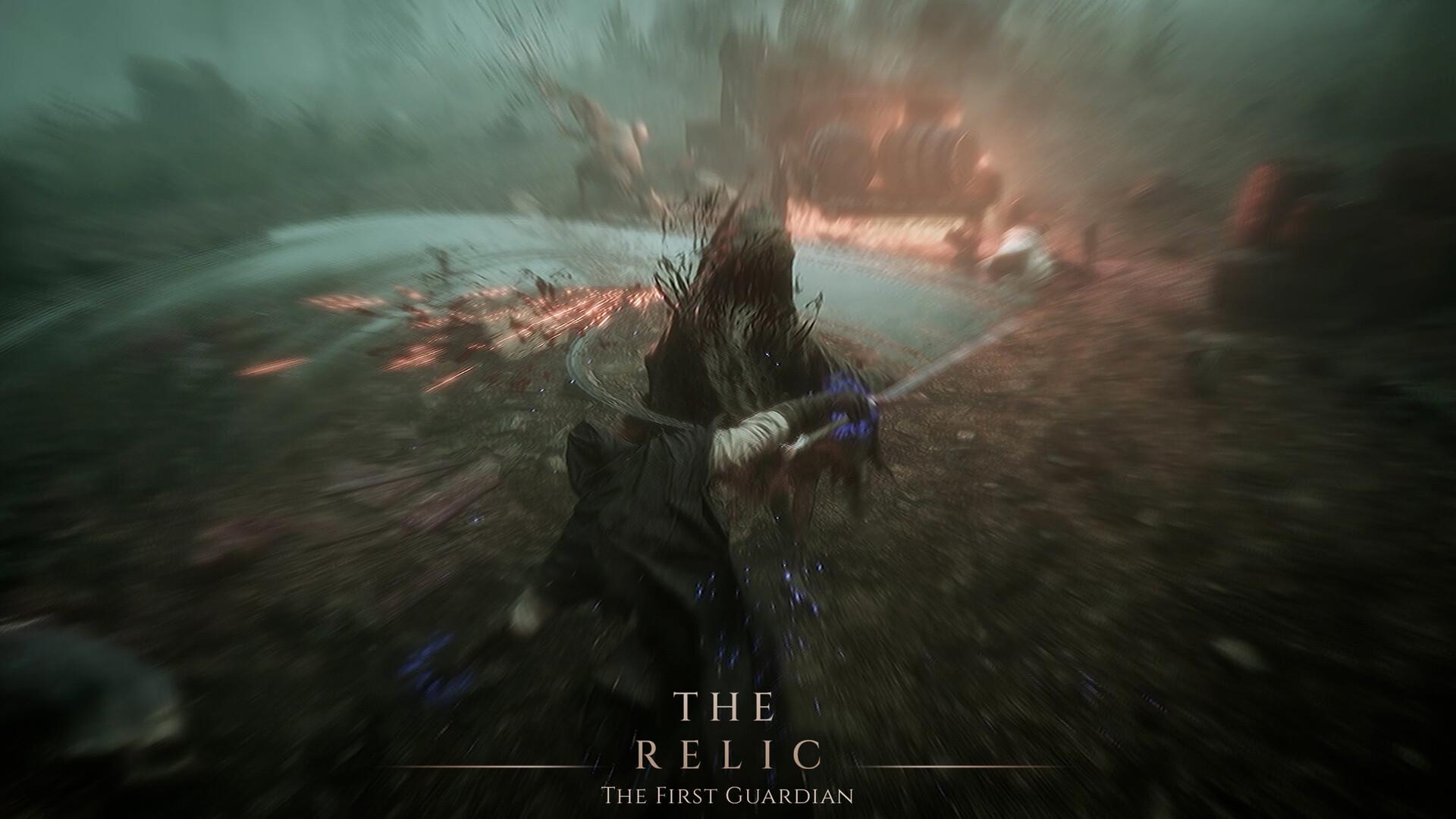
The Relic: First Guardian was announced for PS5 on May 26, 2026. It was pushed back for polish and released on July 31 on PC and PlayStation 5, with Xbox Series X|S and Switch 2 versions following.
Since then, Project Cloud Games has shipped eighteen patches.
That number tells you more about this game than any preview quote, and it is not entirely the criticism it sounds like.
Twelve people, six years
The Relic: First Guardian was built by a core team of roughly a dozen people over six years. It is a dark action RPG rooted in Korean mythology — not the Norse, Japanese or generic-medieval settings the genre defaults to — with fast, punishing combat built around the tension between aggression and vulnerability.
Preview coverage was genuinely enthusiastic. PC Gamer called it one of the most exciting upcoming action RPGs, citing stylish combat, tragic bosses and a world drawn from Asian folklore. Gaming Bible reached for "The Witcher meets Dark Souls." DualShockers singled out the art style.
Those are strong signals for a twelve-person studio competing in a genre dominated by teams a hundred times larger.
What eighteen patches actually means
A delay for polish, followed by eighteen patches focused on technical issues and performance, describes a specific and common situation: the game was good and the build was not ready.
This is the structural reality for small teams shipping ambitious action games. QA at scale is expensive. A dozen people cannot test across the hardware permutations a PC release encounters, and a delay that adds two months does not manufacture a QA department.
What matters is what the studio did next, and eighteen patches in the weeks after launch is an aggressive support cadence. That is a team treating a rough launch as something to fix rather than absorb.
It does mean the honest advice depends on when you are reading this. A game eighteen patches past launch is not the game that reviewers and early buyers encountered, and judgements formed in early August describe a build that no longer exists.
The combat idea is the reason to care
The design pitch is more specific than "souls-like," and it is worth stating precisely.
Most stamina-driven action RPGs use a resource meter as the limiter: every swing, dodge and block draws from a pool, and running dry leaves you exposed. It is a proven system, and it has been iterated on for fifteen years to the point of genre orthodoxy.
The Relic's stated focus is the balance between action and vulnerability — making offence and exposure two sides of the same decision rather than two separate meters. The interesting question for any game in this space is whether it has found a genuinely new expression of that tension or a well-executed variation on the familiar one.
On the available evidence it is closer to the latter, executed with real style. That is not a criticism. "Well-made game in a crowded genre with a distinctive setting" describes most of the best action RPGs of the last decade.
The delay was the right call, and it was not enough
There is a lesson here about what delays can and cannot buy, and it generalises well beyond this game.
Project Cloud Games pushed the release from May to July specifically to polish it. That was the correct decision — shipping in May would plainly have been worse. But the delay bought roughly two months of a twelve-person team's time, and the problems that surfaced at launch were the kind that only appear when tens of thousands of different machines run your code simultaneously.
No internal testing schedule reproduces that. It is why large publishers run paid QA operations and staged rollouts, and why a small studio's launch day is functionally its first real test pass.
Set against Dawn of War IV's two-month delay — a bigger team, a bigger budget, the same stated reason — the contrast is instructive. Both studios made the same judgement. Only one of them has the resources for that judgement to be sufficient.
Korean mythology is the differentiator
The setting deserves more attention than it got, because it is the thing no competitor can copy quickly.
Dark fantasy has drawn from a narrow well — Norse myth, Arthurian legend, a generic dark-medieval Europe, and increasingly Japanese folklore. Korean mythology is comparatively unmined in games, and it brings its own cosmology, its own relationship between the living and the dead, and a visual vocabulary that does not look like everything else on a storefront page.
For a small studio, that is the smartest possible investment. A twelve-person team cannot out-scale a major publisher, but it can build something that looks and feels unlike anything else in the genre — and distinctiveness is what gets a game noticed in a market where almost everything fails to find an audience.
Should you play it?
Check the current state first. Eighteen patches in, the technical picture has moved considerably from launch. Look at recent reviews rather than launch-window ones — the gap between them is the whole point.
Play it if you want a dark action RPG with a setting you have not seen before, and you are willing to accept the rough edges that come with a twelve-person production.
Play it if you follow the genre closely and want to see what a small team does with it. The combat design has clear ideas behind it.
Wait if you need a polished, frictionless experience. That is not what a studio of this size ships on day one, and honesty about that is more useful than enthusiasm.
Note the platform. Xbox Series X|S and Switch 2 versions arrived after PC and PS5 — later ports generally benefit from the patches that preceded them.
The takeaway
The Relic: First Guardian is not redefining the action RPG. It is a distinctive, well-directed entry in a crowded genre, built by twelve people over six years, drawing on mythology the genre has barely touched.
It launched rough and has been patched hard. That combination — real ambition, limited resources, and a studio that kept working after release — is what a small team shipping against much larger competition actually looks like. Judging it by its launch build would be judging the wrong game.
Tags: action RPG gaming news The Relic First Guardian Project Cloud Games Dark Fantasy RPG Souls like Games Upcoming PC Games 2026 Video Game Review
Written by Shujaat Ahmed
Shujaat Ahmed is the founder and editor of Door To Gaming. A lifelong gamer, he writes about the games, hardware, and industry news he cannot stop thinking about.