The RTX 50 Super VRAM Upgrade: Laptops Got It, Desktops Didn't
The 12GB mobile RTX 5070 shipped exactly as leaked. The 18GB and 24GB desktop Super cards did not — and outlets still can't agree whether they were delayed to CES 2027 or killed outright. The split between laptop and desktop explains why.
By Shujaat Ahmed · · · 5 min read
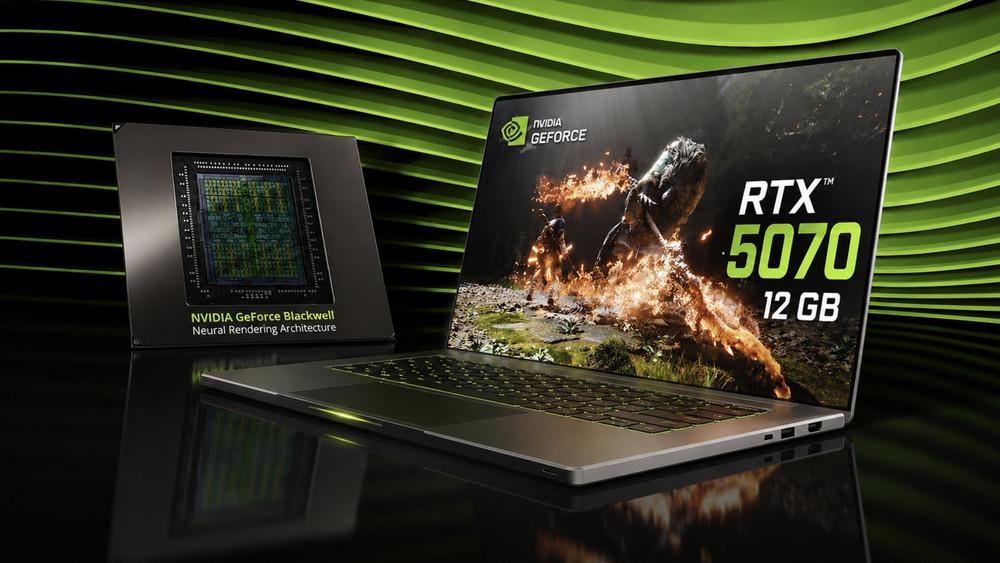
In July, the leaks said NVIDIA was about to fix Blackwell's biggest complaint. A laptop RTX 5070 with 12GB instead of 8GB, and a desktop "Super" refresh carrying serious VRAM increases across the stack. The VRAM problem, finally solved.
Two months on, exactly one half of that came true — and the half that didn't has turned into one of the murkiest stories in PC hardware, where reputable outlets cannot agree on whether the product was delayed or killed.
Here is what is actually verifiable.
The laptop upgrade was real
The mobile RTX 5070 did get its memory increase. It ships with 12GB of VRAM, built on the new 3GB GDDR7 modules — the denser chips that let NVIDIA raise capacity without widening the memory bus.
That matters more than a spec-sheet bump suggests. 8GB on a mid-range mobile GPU in 2026 was a genuine problem: modern AAA titles at high texture settings push past it, and when they do you get texture pop-in and frame-time stutter that no amount of raw shader performance rescues. 12GB moves the RTX 5070 laptop from "will hit a wall" to "has headroom."
So the leaks were right about the mechanism. The 3GB GDDR7 module was the key, and where NVIDIA could get those modules, capacity went up.
The desktop Super refresh is where it falls apart
The planned desktop lineup was genuinely ambitious. Per the specifications that have circulated consistently since the first leaks:
- RTX 5060 Super — 12GB
- RTX 5070 Super — 18GB
- RTX 5070 Ti Super — 24GB
- RTX 5080 Super — 24GB
All four depend on the same 3GB GDDR7 modules that made the laptop upgrade possible. An RTX 5070 with 18GB would have been an extraordinary mid-range card.
None of them have launched. And on the question of whether they ever will, the reporting has split into two camps that cannot both be right.
Cancelled, or delayed?
One camp says the refresh is dead. TweakTown reported the series "delayed indefinitely" as NVIDIA informed its partners, and by August, coverage out of Gamescom was treating the cancellation as settled, attributing it to GDDR7 shortages, overloaded production capacity, and NVIDIA's priorities shifting to AI server silicon.
The other camp says it slipped rather than died. Chinese outlet Benchlife has tipped a CES 2027 unveiling, and Notebookcheck — tracking these reports across the year — notes that the information has been contradictory throughout, with February reports simultaneously claiming no 2026 launch at all and a Q3 2026 window for at least one model.
"Delayed indefinitely" and "cancelled" are not the same claim, and neither has been confirmed by NVIDIA.
The honest position is that nobody outside NVIDIA knows, and the leaker community's track record this year does not inspire confidence in either direction. What is not in dispute is the cause, and the cause is the interesting part.
Why the memory decides everything
The Super refresh was never a silicon story. The dies were the same Blackwell parts. The entire value proposition was capacity, and capacity came from one component: the 3GB GDDR7 module.
Those modules are in critically short supply, and the reason has nothing to do with gaming.
DRAM manufacturers are in the middle of a historic reallocation toward AI. TrendForce reported conventional DRAM contract prices rising 58% to 63% quarter-over-quarter in Q2 2026, driven by AI server demand for high-capacity RDIMMs and cloud providers locking in long-term supply agreements. In the same breath, it noted suppliers "reallocating capacity toward HBM and server applications" and actively reducing shipments to PC OEMs to serve the more profitable server segment.
That is the whole explanation. A 3GB GDDR7 module sold into a consumer graphics card competes, for fab capacity, against memory destined for AI accelerators at far better margins. When supply is tight, the consumer product is the one that waits.
We looked at how this memory crunch reaches your build more broadly, and the Super refresh is the clearest single example of it: a product designed around a component that the market repriced out from under it.
What the laptop/desktop split tells you
The most useful signal in all of this is the asymmetry. Laptops got their memory upgrade. Desktops did not.
That is not arbitrary. Laptop GPUs ship inside complete machines on long, committed OEM production schedules, with volumes locked in well ahead of time — the memory was allocated before the squeeze tightened. Desktop add-in cards are a spot-market product NVIDIA can shelve at will, and shelving costs it comparatively little while GDDR7 is worth more elsewhere.
When component supply gets scarce, the flexible product absorbs the pain. Desktop GPUs are the flexible product.
What to do about it
If you are shopping now, buy what exists. An 18GB RTX 5070 Super is not a thing you can plan around, and on the current evidence it may not be a thing in 2026 at all. Treat any Super-series card as a rumour until NVIDIA says otherwise on a stage.
If you are choosing between capacity and raw speed at a given price, weight capacity more heavily than you normally would. Memory is the constrained resource across this entire generation, which means VRAM is the spec least likely to get cheaper and most likely to determine how long a card stays comfortable.
And if you are on a mobile RTX 5070 with 12GB — you got the part of the leak that survived contact with the supply chain.
Tags: NVIDIA Blackwell RTX 50-Series RTX 5070 Mobile RTX 5080 Super PC Hardware Leaks GDDR7 VRAM Gaming Laptops GPU Benchmarks
Written by Shujaat Ahmed
Shujaat Ahmed is the founder and editor of Door To Gaming. A lifelong gamer, he writes about the games, hardware, and industry news he cannot stop thinking about.