Corsairs: Battle of the Caribbean and the Most Common Outcome in Games
A thoughtful naval strategy revival with twelve ship types and historically grounded ammunition choices — sitting at 33% positive from 119 Steam reviews. Small audience, poor reception. Not an unusual failure, which is exactly why it's worth writing about.
By Shujaat Ahmed · · 5 min read
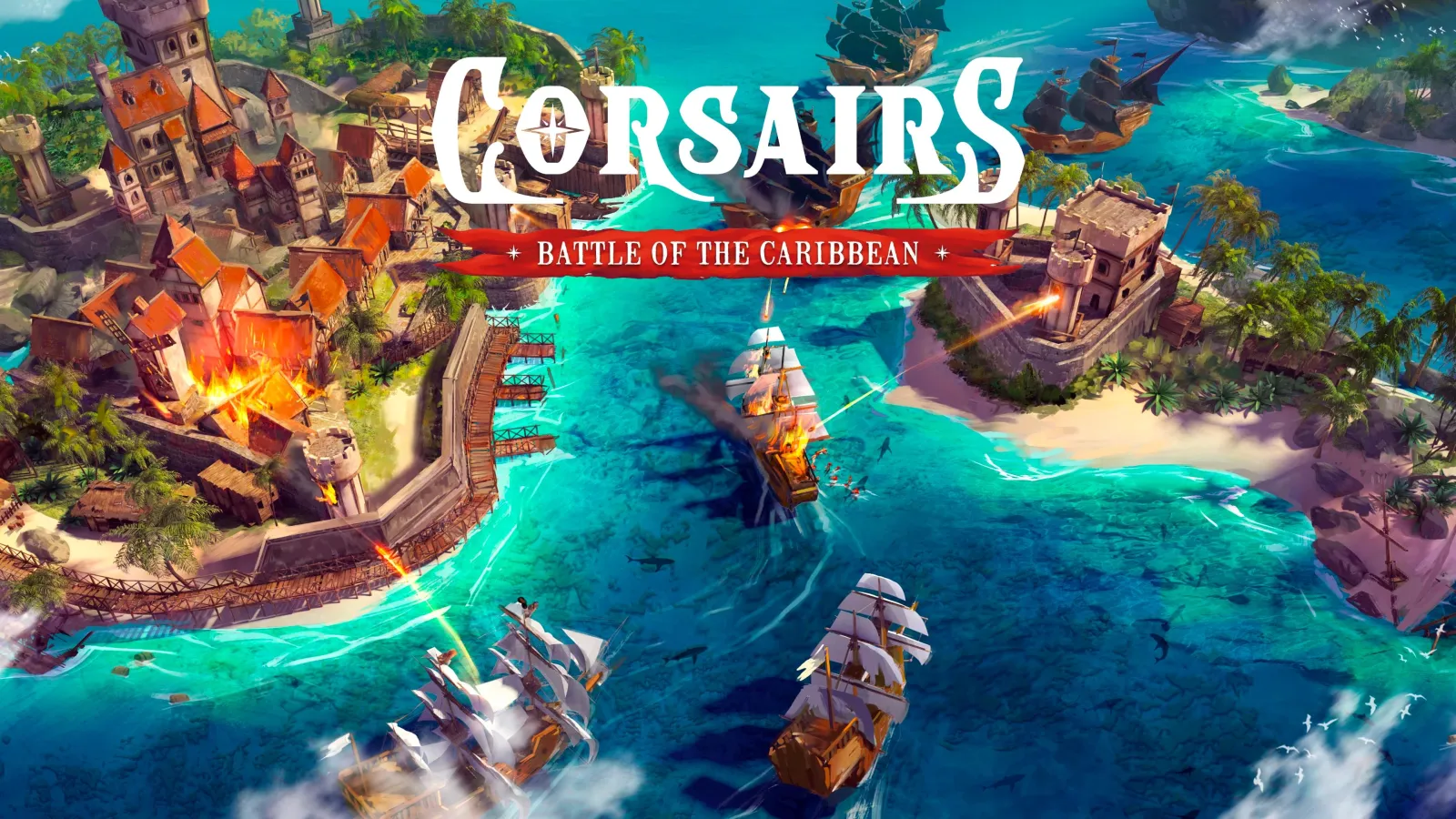
Corsairs – Battle of the Caribbean launched on May 18, 2026, developed by Fishing Cactus and published by Microids — a modern revival of the cult 1999 strategy game Corsairs, from the publisher that owned the original.
It has not gone well. Steam user reviews sit at 33% positive from 119 reviews, which is a "mostly negative" rating on a very small sample.
Both halves of that sentence matter, and neither is what the launch coverage described.
What the game actually is
The design is more thoughtful than the reception implies, which is what makes this worth examining rather than dismissing.
Corsairs blends tactical naval combat with fleet and trade management. You pick one of five maritime powers — French, Danish, Spanish, British or Dutch — and the game asks you to run a commercial operation as much as a war: leading a fleet, defending trading positions, and treating economics as the reason the battles happen.
In combat, the systems are specific rather than generic:
- Twelve distinct ship types, each with its own role
- Three specialised ammunition types, chosen according to the situation
- Positioning as the core skill, with wind, range and facing determining outcomes
The ammunition system is the most interesting part. Historically, naval gunners chose between round shot for hulls, chain shot for rigging and grape for crews — a genuine tactical decision about whether you want to sink a ship, disable it or capture it. Building that choice into the combat loop is exactly the right instinct for this subject.
There is a Campaign mode and a Skirmish mode for quicker sessions, playable solo against AI or in online multiplayer for up to four.
On paper, that is a competent, well-researched design.
Why 33% positive, and why 119 reviews
Two numbers, two different problems.
33% positive indicates that whatever is wrong is affecting most players who bought it. A rating that low on a game with a coherent design usually points at execution rather than concept — interface friction, unclear systems, balance problems, technical faults, or a campaign that fails to teach its own mechanics. Strategy games are especially vulnerable to the last of these: a game can have excellent systems and still fail entirely if players cannot see what the systems are doing.
119 reviews is arguably the more brutal figure. It indicates a very small number of buyers. Steam reviews typically represent a low single-digit percentage of owners, so this is a game that reached a modest audience and then disappointed most of it.
That combination — small audience, negative reception — is the outcome the overwhelming majority of releases get. Across Steam as a whole, the top 1% of titles take roughly 94% of estimated revenue, and a large share of releases never receive meaningful review counts at all. Corsairs is not an unusual failure. It is an ordinary one, which is precisely why it is worth writing about honestly.
The nostalgia revival problem
There is a specific trap here that catches a lot of these projects.
Reviving a cult classic from 1999 sounds like a strong position: a known name, an existing affection, a publisher with rights and history. But the audience for a twenty-seven-year-old strategy game is small, older, and — crucially — remembers the original better than the original deserves. Memory smooths out the interface problems and the tedium, leaving an idealised version no remake can match.
Meanwhile, the much larger audience of players with no attachment to Corsairs evaluates the new game purely on its merits against everything else available in 2026. Nostalgia earns nothing from them.
So a revival like this has to satisfy a small group carrying impossible expectations while also winning over a large group that does not care about the heritage at all. That is a harder brief than making a new game, and it is routinely mistaken for an easier one.
What it means for this kind of release
None of this suggests Fishing Cactus or Microids did something disreputable. A twelve-ship roster, an ammunition system with real historical grounding, five playable nations and both campaign and skirmish modes is a genuine body of work.
It does illustrate the economics that have squeezed mid-tier development for years. A game at this scale needs to either sell well immediately or be supported through a long tail of patches and content, and a 33% rating on 119 reviews makes the second option difficult to fund. That pressure is the same one driving the wider contraction across the industry, where studios closed this year at a rate not seen before.
Should you buy it?
Check the current state before anything else. This assessment reflects the post-launch picture. If the developers have patched substantially since, recent reviews will show it, and recent reviews are the only ones worth reading for a game in this position.
Consider it if you specifically want age-of-sail fleet tactics with trade management, you have exhausted the alternatives, and it is discounted. The systems underneath are real, and the ammunition and positioning mechanics have genuine depth for someone willing to push through friction.
Avoid it if you want a polished, welcoming strategy game. A 33% rating means most buyers had a bad time, and no amount of interesting design on paper overrides that.
Do not buy it for the nostalgia. That is the trap this release is built on, and it is the reason to be most careful rather than least.
The takeaway
Corsairs – Battle of the Caribbean is a competently conceived naval strategy game that did not work for most of the small number of people who played it.
The pirate fantasy did not return. A modest revival of a cult 1999 title shipped, found a few hundred buyers, and disappointed two-thirds of them — which is the most common outcome in this industry and the one that almost never gets reported as news.
Tags: Corsairs Battle of the Caribbean Corsairs game naval strategy game pirate RTS game Microids Fishing Cactus tactical naval combat pirate game 2026 real time strategy games naval warfare PC game Corsairs Conquest at Sea multiplayer pirate game sailing strategy game Caribbean naval battles
Written by Shujaat Ahmed
Shujaat Ahmed is the founder and editor of Door To Gaming. A lifelong gamer, he writes about the games, hardware, and industry news he cannot stop thinking about.