June 2026's Biggest Indie Was Made by Two People in Two Months
We picked four indies to watch in June. The one that actually mattered wasn't on the list: MECCHA CHAMELEON, a $5 hide-and-seek game from two developers, sold 15 million copies in under a month with zero advertising and hit the 44th highest concurrent player count in Steam's history.
By Shujaat Ahmed · · 5 min read
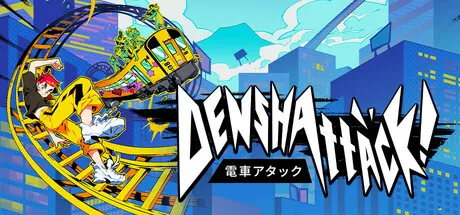
June 2026 was an exceptional month for independent games. We picked four to watch — Solarpunk, Shift at Midnight, Wax Heads and Denshattack!
We missed the one that mattered. By a distance that is genuinely embarrassing to write down.
Two people. Two months. Fifteen million copies.
MECCHA CHAMELEON launched on June 10, 2026, made by two Japanese developers — Lemorion_1224 and Haganeiro — and priced at $5.
It is a multiplayer hide-and-seek game. You play a white chameleon and paint your own body to match the stage around you; survival depends on picking the right spot, holding the right pose, and a degree of artistic skill. That is the entire concept.
What happened next:
- Debuted first on the Japanese Steam sales charts, ahead of Forza Horizon 6 and Final Fantasy VII Remake Intergrade
- Peaked at 340,535 concurrent players on June 22 — the 44th most concurrently played game in Steam's history
- Sold 3 million copies in its first week
- Reached 15 million sales in under a month
- Sits at "Very Positive", roughly 89% favourable across more than 32,000 reviews
And the two details that make it remarkable rather than merely successful: the game was built on a two-month development cycle, and the developers spent nothing on advertising.
Shroud, xQc, Jynxzi and TheBurntPeanut all streamed it. That was the marketing budget.
Why it worked, and why it could not be predicted
It is tempting to reverse-engineer a formula here, and worth resisting.
The game does have the properties that make something streamable: it is instantly legible in a clip, funny to watch someone lose at, visually distinctive, and built for groups. You understand Meccha Chameleon in four seconds of footage, which is roughly the attention budget a short-form clip receives.
But hundreds of games have those properties and sell nothing. Streamer-driven virality is not a strategy that can be reliably executed; it is an outcome that occasionally happens, and the games it happens to are usually cheap, simple and social. The $5 price matters enormously — it removes the deliberation step. Nobody researches a $5 purchase.
What this demonstrates is not a repeatable formula. It is that the ceiling for a two-person team has not moved down, even as the industry sheds tens of thousands of jobs and budgets contract everywhere else.
The context that makes 15 million absurd
Set this against what the Steam market actually looks like.
Across the platform, the top 1% of titles take roughly 94% of estimated revenue, the median game that receives any reviews at all makes a few hundred dollars, and a substantial share of releases never get reviewed at all. In that environment, a two-month project from two people did not merely succeed — it entered the top fifty concurrent player counts in the platform's history.
Meccha Chameleon is not evidence that indie development is healthy. It is the purest possible illustration of how the distribution works: enormous outcomes concentrated in a handful of titles, with everything else fighting for the remainder. The same month, Corsairs – Battle of the Caribbean sold to a few hundred people and disappointed most of them.
Both are June 2026. Only one is a story anyone wrote about.
What we got right, and one thing we got wrong
On the four we did pick:
Solarpunk launched June 8 on PC, PS5, Xbox Series X|S and Switch 2 — a cosy survival game on floating islands with building, farming, crafting and exploration. It landed at 80% positive from around 1,100 reviews, which is a solid, respectable result: a real audience, broadly satisfied.
Denshattack! delivered on its premise — a train performing tricks while fighting rival gangs and a megacorporation, which remains one of the better elevator pitches of the year.
Shift at Midnight also arrived, combining co-op horror with gas station management, where the job is working out which of your customers are doppelgangers. The concept is strong and the co-op horror space is crowded.
Wax Heads we simply got wrong. The cosy-punk record shop sim from Patattie Games and Curve Games launched on May 5, 2026, not in June. It is an excellent game — Forbes and Polygon were both effusive — but it belonged in the previous month's list.
The lesson about "games to watch" lists
There is a useful admission buried in this.
Curated previews are built from what is visible in advance: press releases, publisher outreach, demos, existing wishlists. That machinery surfaces games with someone doing publicity for them. Solarpunk had a publisher. Wax Heads had Curve Games. Denshattack! had a campaign.
Meccha Chameleon had two people and no marketing spend. It was, by construction, invisible to the process that produces these lists — right up until the moment it was the 44th most-played game in Steam's history.
That is not an argument against previews. It is a reminder that the most interesting thing in any given month is frequently the thing nobody was in a position to preview.
What to actually play
Meccha Chameleon, if you have friends and $5. Fifteen million people and an 89% rating are not wrong, and it is designed for group play.
Solarpunk, if you want cosy survival with genuine systems behind it. 80% positive is a real endorsement, and it is on every current platform.
Wax Heads, whenever it actually came out, because the reviews for it were the strongest of anything in this group.
Denshattack! or Shift at Midnight, if the premises grab you. Both are exactly what they say, and both are the kind of game that only gets made independently.
June 2026 was a genuinely great month. It was just great in a way no preview could have told you in advance.
Tags: gaming news PC Gaming Indie Games June 2026 Releases Solarpunk Game Shift at Midnight Wax Heads Denshattack Upcoming Indies Cozy Games Co-op Horror Arcade Games Gaming Backlog Hidden Gems
Written by Shujaat Ahmed
Shujaat Ahmed is the founder and editor of Door To Gaming. A lifelong gamer, he writes about the games, hardware, and industry news he cannot stop thinking about.