NVIDIA Retired the Classic Control Panel: Where Every Setting Went
Driver 610.47 quietly killed the twenty-year-old Control Panel and moved everything into the NVIDIA App. Four months and three driver releases later, here is exactly where each setting you rely on now lives — and the one product line that kept the old panel.
By Shujaat Ahmed · · 6 min read
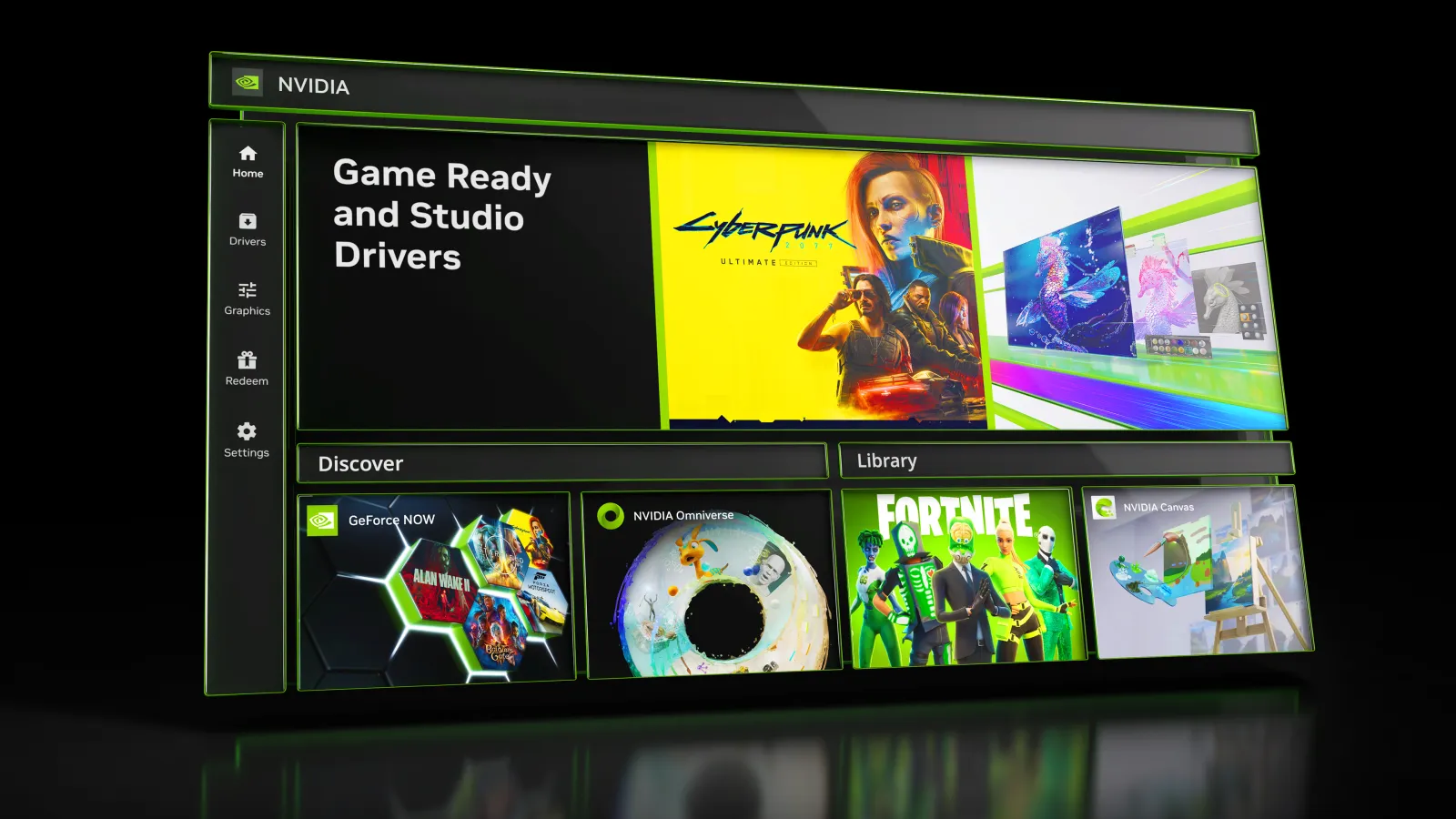
The classic NVIDIA Control Panel is done. After roughly two decades as the default home for GeForce settings, NVIDIA has formally retired the utility for consumer graphics cards and is funneling everyone into the NVIDIA App. This isn't a rumor or a "coming soon" roadmap slide — it shipped back in May, and every driver released since has made it permanent.
Here's exactly what happened, where things stand now in September 2026, and — the part that actually matters — where every setting you rely on has moved.
What NVIDIA Actually Announced
NVIDIA confirmed the retirement in the release notes for GeForce driver 610.47 WHQL, which went out on May 26, 2026. The company's wording was blunt: "After 20 years of dedicated service, the classic NVIDIA Control Panel is officially retiring for Game Ready and Studio Drivers."
That same release opened the new R610 driver branch and bumped CUDA support to 13.3, but the App change was the part that stuck.
Concretely, three things became true with that driver:
- The Control Panel no longer receives new features, bug fixes, or updates on consumer drivers.
- It is no longer bundled inside Game Ready or Studio driver packages.
- A clean install (the "perform a clean installation" checkbox in the installer) removes it entirely, leaving the NVIDIA App as the only front end.
The scope is specifically GeForce Game Ready and Studio drivers — the software the overwhelming majority of gamers and creators run.
Where Things Stand in September 2026
The original wave of coverage treated this as breaking news, but the transition is now well past the announcement. NVIDIA has shipped a string of Game Ready drivers since — 610.62 on June 16, then 610.74, then a 610.82 hotfix in July — and none of them bring the Control Panel back. On a freshly built PC today, the classic panel simply isn't there, and it hasn't been for close to four months.
The NVIDIA App, meanwhile, has kept absorbing the leftovers. Recent updates folded in the last stragglers from the old 3D settings list — anisotropic filtering, antialiasing, MFAA, PhysX, texture filtering, and background-application frame-rate caps — plus multi-monitor Surround and bezel correction. The "the App is missing features I actually need" complaint that held water a year or two ago has largely evaporated.
What This Means for Your PC Right Now
Don't panic — nothing got yanked off your machine overnight. If you already have the Control Panel installed and you update your driver normally, it stays put. NVIDIA is only stripping it out during clean installs. And if you do lose it and want it back, it's still listed on the Microsoft Store as a free download.
Two caveats, stated plainly. First, "available" is not the same as "supported": NVIDIA has confirmed it will ship no further updates, bug fixes or new features for the Store build, so treat it as a stopgap rather than a long-term plan. Second, there's one genuine exception — NVIDIA RTX PRO (the professional/workstation line) keeps the Control Panel for now, until the remaining professional features finish migrating to the App. If you're on a GeForce card, that carve-out doesn't apply to you.
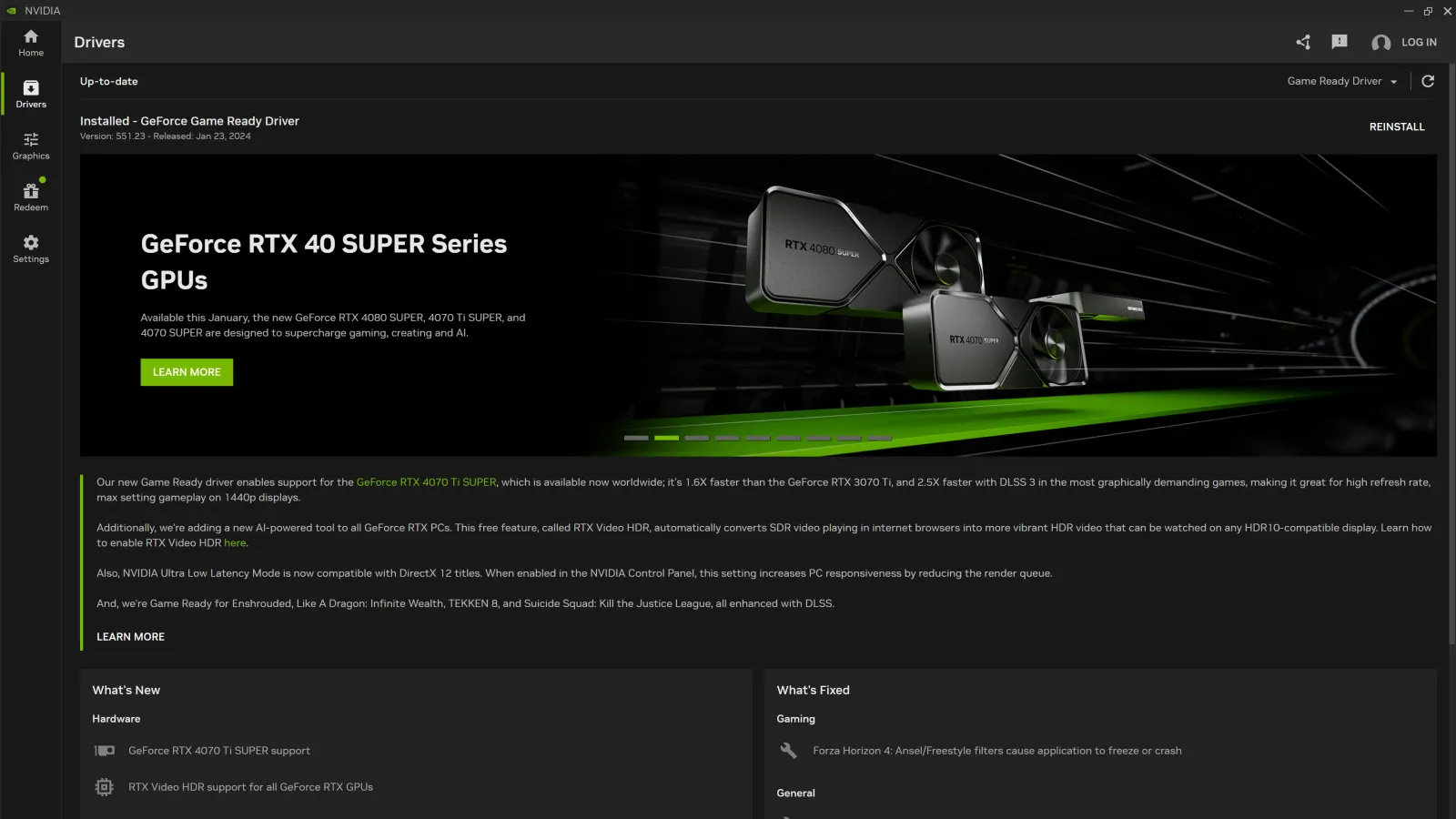
Where Your Settings Went in the NVIDIA App
This is the real reason to keep reading. The App reorganizes the old Control Panel's sprawling tree into two main areas — System and Graphics — and once you internalize the split, it's genuinely faster than the old interface.
Display settings live under the System tab, in the Displays section:
- Resolution and refresh rate
- G-SYNC / Variable Refresh Rate setup
- Display scaling (GPU vs. display scaling, aspect ratio, full-screen)
- Desktop color settings and HDR
- Multiple displays and Surround
The old Manage 3D Settings now lives under the Graphics tab. You still get the same two layers you're used to:
- Global Settings — your system-wide defaults
- Program Settings — per-game overrides, which the App auto-detects for installed titles
That's where V-Sync, Low Latency Mode (Reflex), Max Frame Rate, texture filtering quality, anisotropic filtering, antialiasing, power-management mode, and threaded optimization all now live.
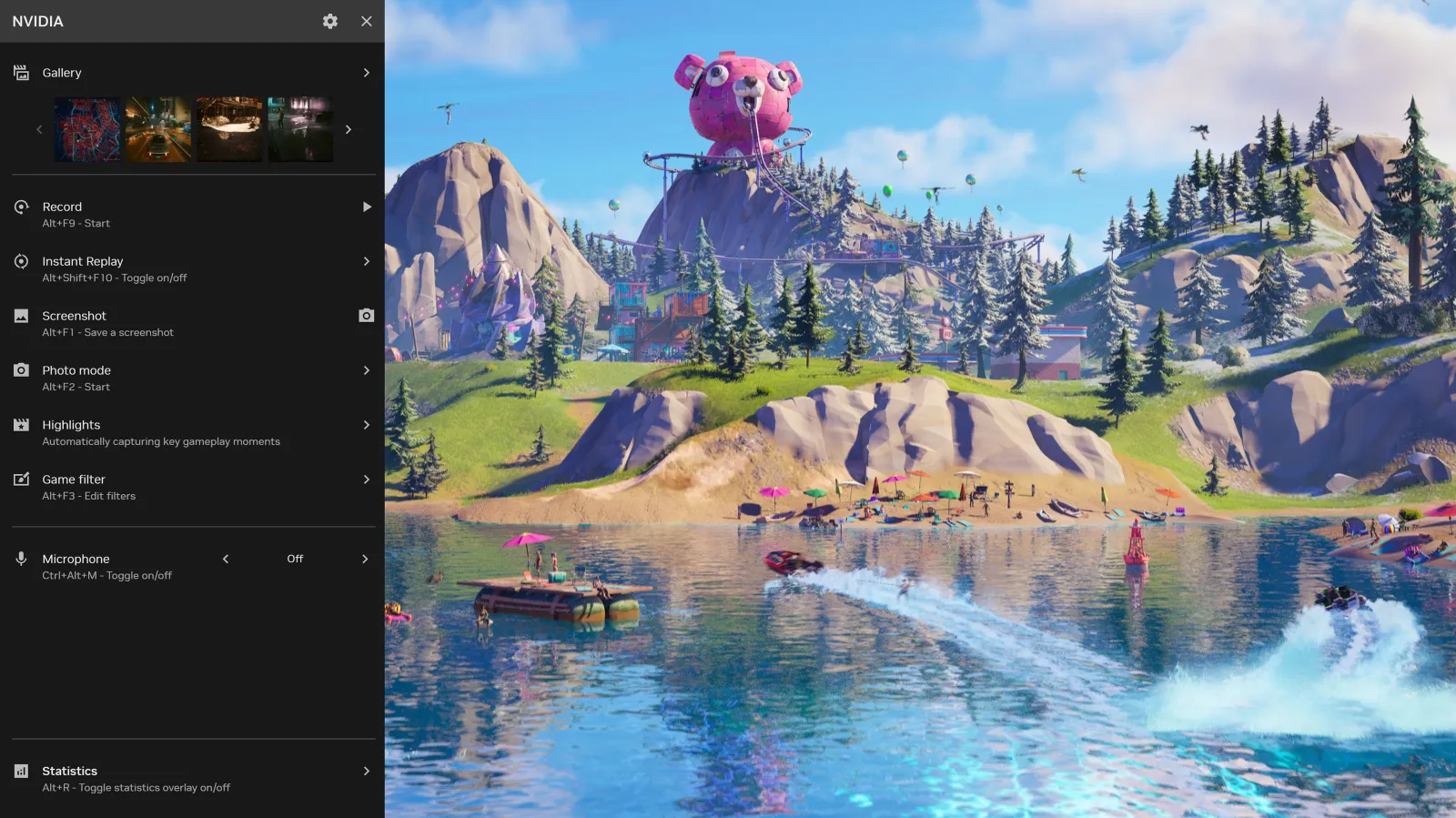
Driver downloads — the job GeForce Experience used to handle — sit under the Drivers tab, and the in-game overlay for stats, filters, recording, and performance tuning is built in.
A Quick Migration Checklist
If you're setting up the App for the first time after years in the Control Panel, do this in order:
- Grab the App from NVIDIA's site (or update it if it's already installed) and let it pull the newest driver from the Drivers tab. This is also how you stay ahead of NVIDIA's driver security bulletins, which are aimed squarely at people running pinned, older drivers.
- Open System → Displays and set resolution, refresh rate, and G-SYNC. If your monitor supports it, enable G-SYNC for full-screen games.
- In the same panel, sort out scaling and confirm color/HDR to your taste.
- Jump to Graphics → Global Settings and set your baseline: V-Sync, Low Latency, texture filtering.
- Add your main games under Program Settings for any per-title tweaks.
One welcome change for holdouts: NVIDIA added an offline mode, so core display and driver settings no longer force you to sign in — historically one of the loudest gripes about the App.
The Trade-Offs, and Whether You Should Care
Let's be honest about what's lost. The classic Control Panel was ugly, but it was fast, lightweight, and utterly predictable. It opened instantly, never phoned home, and never asked you to log in. The App is a heavier, more modern piece of software with an overlay and a lot more going on, and for someone who just wanted to force V-Sync in three clicks, that's a real downgrade in feel — if not in function.
On the other hand, the App is genuinely better at the things most players actually do day to day: one-click driver updates, per-game optimization, DLSS and Reflex overrides, and a built-in overlay that finally retires the clunky GeForce Experience. The community is split, and reasonably so — but the practical reality is that the App now does everything the Control Panel did, and NVIDIA's development is only moving one direction.
My advice: make the switch deliberately rather than by accident. Learn the System/Graphics split now, keep the Microsoft Store version bookmarked as a fallback, and you'll barely miss the old gray-and-green box — even if a small, nostalgic part of you does.
Tags: PC gaming hardware NVIDIA Control Panel dead NVIDIA App migration GeForce drivers update NVIDIA graphics settings classic NVIDIA control panel GPU driver software PC gaming tech news legacy software retirement
Written by Shujaat Ahmed
Shujaat Ahmed is the founder and editor of Door To Gaming. A lifelong gamer, he writes about the games, hardware, and industry news he cannot stop thinking about.